
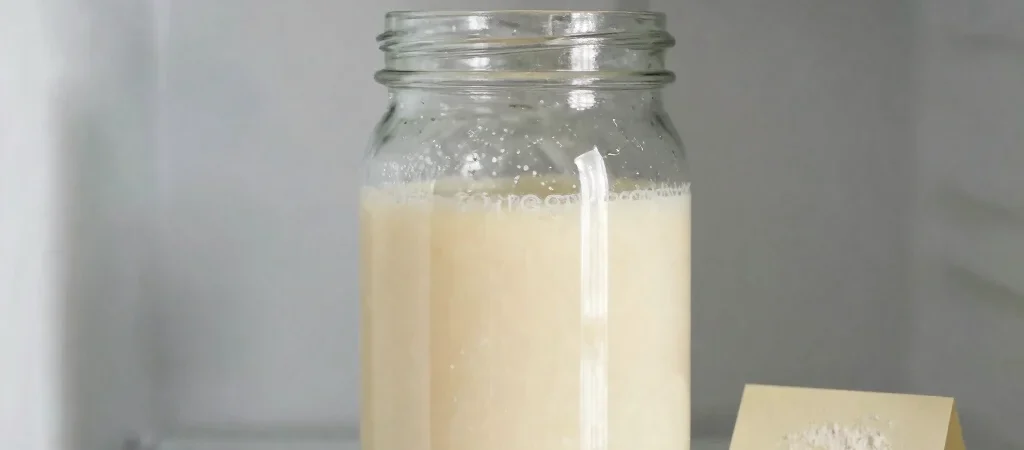
If you bake on weekends but not every day, keeping a starter on the counter can feel like another daily task. Refrigeration slows fermentation, giving you a more flexible routine, though the starter will still need attention. The key is to make the schedule fit how often you bake.
Feed before the cold rest
Before storing the starter, feed it with a measured amount of flour and water and mix thoroughly. Many home bakers use equal weights of starter, water, and flour as a straightforward maintenance feed; a different ratio may suit your schedule, but keep a note of what you used. Use a clean jar with room for the starter to expand, and cover it without sealing it in a way that traps pressure.
Plan the return to baking
When you want to bake, take the jar from the refrigerator and check its surface, smell, and activity. If it looks and smells normal for your starter, keep a small amount and feed it at room temperature, then watch for bubbles and a rise before relying on it in a recipe. A cold starter may need more than one feeding to become reliably active, so leave time rather than planning around an exact clock.
Match care to your calendar
Write down the date of the last feeding and your next planned bake, especially if the jar tends to disappear behind other groceries. If baking is still a few days away, check your usual storage routine instead of feeding repeatedly without a plan. A simple tracker can help you see whether your current interval is working for your kitchen.