
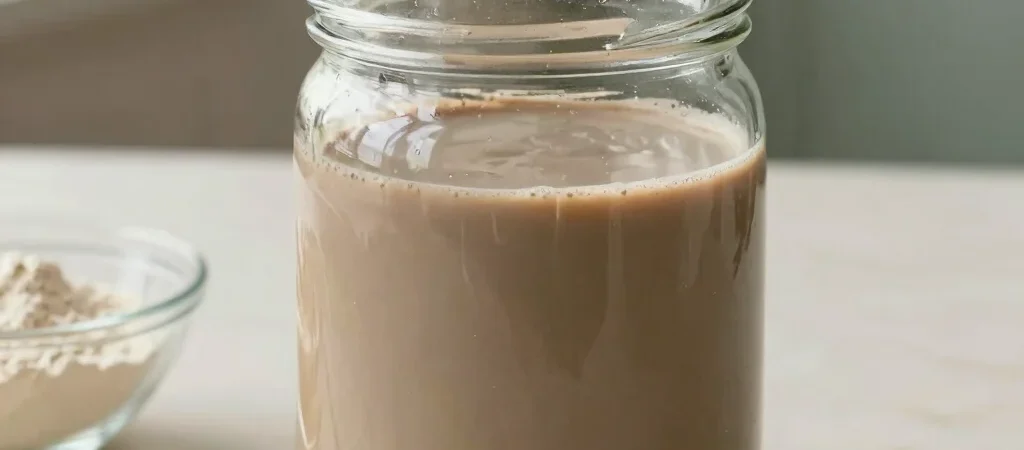
You open the jar and find liquid on top, a sharp smell, or a patch of color you do not recognize. Those signs are not all the same, so pause before stirring anything back in. Check the surface and sides of the jar carefully, then decide whether you are seeing fermentation or possible contamination.
Read liquid and smell together
A thin grayish or brown liquid layer, often called hooch, can appear when a starter has been left between feedings. It may come with a strong, sour or solvent-like smell; that alone does not confirm mold. You can pour the liquid off or stir it in, then retain a small amount of starter and feed it if there are no signs of contamination.
Know when not to recover it
Fuzzy growth or pink or orange discoloration is a reason to discard the starter rather than try to rescue it. Do not scrape off a patch and keep what is underneath. Throw away the contents, wash the container thoroughly, and start again with a clean jar.
Check the next feeding calmly
If there is no suspicious growth or color, note what you found and when the starter was last fed. Retain a small amount, feed it by weight, and observe the bubbles, rise, and smell over the next cycle. If anything remains uncertain, err on the side of discarding it; a starter is replaceable, and the jar can be cleaned before you begin again.